|
Chalk Farm is a small urban district of northwest London, England immediately north of Camden Town and currently split equally between the electoral wards of Camden Town and Primrose Hill in the south and Haverstock in the north.
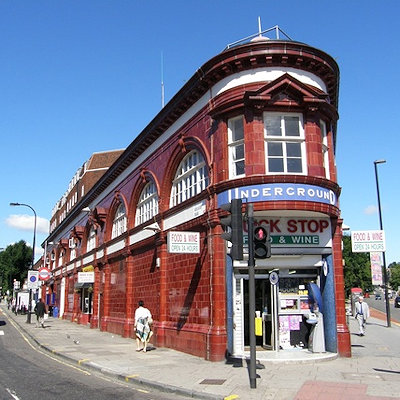
The land slopes upwards more steeply to the north-west and abruptly to form a knoll to the south-west which is Primrose Hill. Chalk Farm tube station is the closest underground network station to all parts, the defining criterion. This is true of much of the therefore loosely more Chalk Farm-associated upmarket western residential definition and green (Regents Park definition) of Primrose Hill. The south of the area has regular residents on its broadest definition, capable therefore, of including Jude Law, Sadie Frost and Sienna Miller among the highest-grossing early 21st century 'Camden set' of writers, artists and actors, but equally parts of both wards have some stubborn poverty and a significant minority of their housing is social housing.
Its name was formerly Chalcot when it was a hamlet of the once vast Hornsey parish (centred on a village of the same name). Before the post-1791 development of Camden Town the residents of Primrose Hill, who do not live on the green hill were divided between Hornsey and St Pancras villages. It is in this vein that many residents of Primrose Hill seek alternatives to being considered part of Camden, however under the London Government Act 1963 Camden became the overall name for the borough and a convenient, neutrally loaded term for all inchoate and non-historic districts by being of carefully planned late Georgian, 1791, origin rather than named after the London Underground network which has seen various changes to station names and debatable associations with stations.
|