Brompton, sometimes called Old Brompton, is an area in the Royal Borough of Kensington and Chelsea in London. Until the latter half of the 19th century it was a scattered village made up mostly of market gardens in the county of Middlesex. It lay southeast of the village of Kensington, abutting the parish of St Margaret's, Westminster at the hamlet of Knightsbridge to the northeast, with Little Chelsea to the south. It was bisected by the Fulham Turnpike, the main road westward out of London to the ancient parish of Fulham and on to Putney and Surrey. It saw its first parish church, Holy Trinity Brompton, only in 1829. Today the village has been comprehensively eclipsed by segmentation due principally to railway development culminating in London Underground lines, and its imposition of station names, including Knightsbridge, South Kensington and Gloucester Road as the names of stops during accelerated urbanisation, but lacking any cogent reference to local history and usage or distinctions from neighbouring settlements.
Brompton has been home to many writers, actors and intellectuals. The Survey of London gives a long list. Its name survives formally to this day, only just, in the shared reference to two of the council's electoral wards called, "Brompton" and "Hans Town".
The first recorded mention of Brompton dates back to 1292. It was a rural area which subsequently attracted attention as the story of developments centred along a turnpike road that ran south westward from London through Knightsbridge Green and horticultural Brompton to Little Chelsea and the ancient parish of Fulham on the banks of the Thames and thence over Putney Bridge onto the County of Surrey. Brompton Park Nurseries were founded in 1681 by four leading gardeners, led by George London. In the late 18th century, Carey's map of 1787 shows Brompton as a collection of market gardens. A hundred years later, Charles Dickens Jr. (eldest child of Charles Dickens) wrote in his 1879 book Dickens's Dictionary of London that "Brompton was at one time almost exclusively the artists' quarter and is still largely frequented by the votaries of the brush and chisel, though of late years Belgravia has been encroaching upon its boundaries, and Belgravian rents are stealing westward."
Landmarks "in Brompton" include:
- Bolton's Theatre Club
- Brompton Cemetery
- Brompton Fire Station, 1868-1964 at South Parade, (Chelsea)
- Brompton Oratory
- Chelsea and Westminster Hospital, formerly St. Stephen's Hospital, founded as "St George's Union Infirmary" in 1878.
- Church of St Yeghiche, Armenian cathedral, formerly, St Peter's Cranley Gardens, 1866-7
- Deutsche Evangelische Christuskirche in 1904-5
- Fulham Road Jewish Cemetery formerly known as the "Jewish Cemetery, Brompton", opened 1815
- Gloucester Road tube station formerly known as "Gloucester Road, Brompton"
- Goethe-Institut
- Grabowski Gallery (1959-1975), former Avant-garde art gallery at 84 Sloane Avenue SW3
- Holy Trinity Brompton
- Holy Trinity Prince Consort Road in 1899
- Imperial College London
- French Institute
- Ishmaili Centre
- Lycée Français Charles de Gaulle
- Michelin House
- Natural History Museum
- Paris Pullman Cinema
- Royal Brompton Hospital, formerly known as "Brompton Consumption Hospital"
- Royal Marsden Hospital, formerly known as the "New Cancer Hospital"
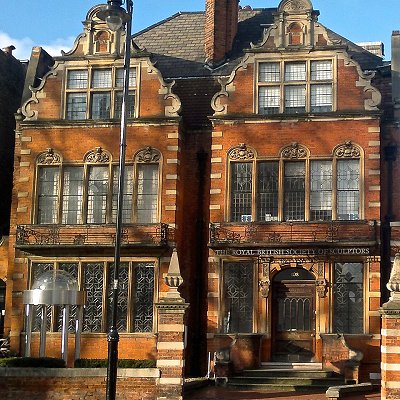
- Royal Society of Sculptors
- Science Museum
- South Kensington tube station
- St Augustine's, Queen's Gate
- St Paul's, Onslow Square
- Victoria and Albert Museum
- West Brompton station
|