Like us on Facebook

MENU
Europe
England
London
South-East London
Barnehurst
Barnes Cray
Beckenham
Bellingham
Belvedere
Berry's Green
Bexley
Bickley
Biggin Hill
Blackheath
Brockley
Bromley
Catford
Charlton
Chinbrook
Chislehurst
Crayford
Cudham
Denmark Hill
Deptford
Downe
Downham
East Wickham
Eden Park
Elmers End
Elmstead
Eltham
Erith
Foots Cray
Goddington
Greenwich
Grove Park
Hayes
Herne Hill
Hither Green
Honor Oak
Keston
Kevington
Kidbrooke
Ladywell
Lamorbey
Leaves Green
Lee
Lessness Heath
Lewisham
Locksbottom
Longlands
Maze Hill
Mottingham
New Cross
New Eltham
Nunhead
Orpington
Petts Wood
Plaistow
Plumstead
Pratt's Bottom
Rotherhithe
Ruxley
Shooter's Hill
Sidcup
St Johns
St Mary Cray
Sundridge
Surrey Quays
Sydenham
Thamesmead
Welling
West Wickham
Woolwich
Visitors' London
Things to do in London


PLACE NAMES


Maze Hill
Pepys House, 2 Cutty Sark Gardens, Greenwich - 0870 608 2000
St. Paul's Churchyard, London - 020 7332 3456
tic@visitgreenwich.org.uk

Maze Hill is an area in Greenwich and Blackheath, in south-east London, lying to the east of Greenwich Park, and west of the Westcombe Park area of Blackheath. It is part of the Royal Borough of Greenwich, and takes its name from the main thoroughfare, Maze Hill. It gives its name to Maze Hill railway station.

The road is believed to have taken its name from Sir Algernon May, who lived nearby until 1693, or after Robert May who lived there in 1683. 'Moys Hill' is marked on Rocque's 1745 map, 'Maize Hill' on Greenwood's 1827 map, and 'Maze Hill' on Bacon's map of 1888.

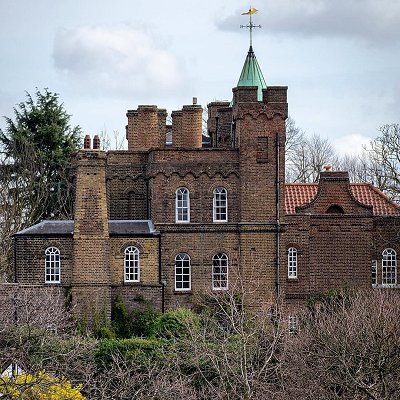
While working as surveyor to the Royal Hospital, the architect Sir John Vanbrugh lived (1719-1726) in a house of his own design, now known as Vanbrugh Castle, overlooking the park on what is now Maze Hill. Immediately to the north of Vanbrugh Castle was Mayfield Lodge, once used to print The Kentish Mercury, and from 1861 a Rescue Society for Females home (marked as 'female reformatory' on maps) which was demolished in 1906.

The southern end of Maze Hill is adjacent to an area marked on Rocque's 1745 map as 'Vanbrugh Fields', with his name surviving in local street names including 'Vanbrugh Park' and 'Vanbrugh Hill'.

Royal Ordnance Factories F.C. played some matches at Maze Hill.

One of the two sites of the comprehensive secondary school, The John Roan School, is situated at the southern end of Maze Hill[6] (the other is on Westcombe Park Road). Greenwich District Hospital (and its predecessor, St Alfege's Hospital) was sited at the northern end of Maze Hill until its closure in 2001 and demolition in 2006; the site is now occupied by a residential development surrounding a Royal Borough of Greenwich leisure centre, library and services complex.

The southern part of Maze Hill (plus Westcombe Park) falls within the Blackheath Westcombe ward of the Royal Borough of Greenwich; the northern area of Maze Hill is in Peninsula Ward.


leonedgaroldbury@yahoo.co.ukFeel free to Email me any additions or corrections


LINKS AVAILABLE TO YOUR SITE


"Leofshema" was an important settlement at the confluence of the rivers Quaggy (from Farnborough) and Ravensbourne (Caesar's Well, Keston), so the village expanded north into the wetter area as drainage techniques improved.

King Alfred was Lord of the Manor of Lewisham, as is celebrated by a plaque in Lewisham Library.

The Manor of Lewisham, with its appendages of Greenwich and Combe, was given by Elthruda, King Alfred's niece, to the abbey of St. Peter at Ghent, of which Lewisham then became a cell, or an alien priory. This grant is said to have been confirmed by King Edgar in 964, and by Edward the Confessor in 1044, with the addition of many privileges.

In the mid-17th century, the then vicar of Lewisham, Abraham Colfe, built a grammar school, a primary school and six almshouses for the inhabitants.

In the 17th century the Manor of Lewisham was purchased by George Legge, later Baron Dartmouth. His son William was raised by Queen Anne to several positions of honour and trust, and was a member of her privy council; and on 5 September 1711, was ennobled as Viscount Lewisham, and Earl of Dartmouth. His grandson George, Lord Dartmouth, obtained from King Charles II [he had been dead for ages] the privilege of holding a fair twice a year, and a market twice a week, upon Blackheath in the parish. The fair used to be held on 12 May and 11 October, but in 1772 it was discontinued, (except for the sale of cattle) by the Earl of Dartmouth, as lord of the manor.

Lewisham's commercial area is one of the largest in South East London. Lewisham Shopping Centre, opened in 1977, has 70 stores over 330,000 square feet. Shops include Marks & Spencer, W H Smith, Sainsburys, H&M, TK Maxx, JD Sports, BHS, SportsDirect.com, Argos and Boots. The centre is between Molesworth Street (a dual carriageway section of the A21) and Lewisham High Street, but most shoppers enter and leave on the High Street. Lewisham Market and the Library are outside the shopping centre in the High Street. Since the Docklands Light Railway extension reached Lewisham, the centre has had an increase in customers. The centre is the major shopping centre in the borough of Lewisham. Also part of the complex is the Lewisham House office tower, the tallest building in the borough and formerly occupied by Citibank. There are proposals to convert this brutalist skyscraper to flats.

Lewisham has a bowling alley and the Glassmill Swimming pool and Gym.

Lewisham has a number of parks, such as Hilly Fields and Lewisham Park.

For 14 years between 2001 and 2015, Lewisham was the only London Borough not to have a cinema. Lewisham once had many cinemas, such as the Lewisham Odeon. In 1930 there were 30 venues showing films. As of 2015, Lewisham Borough has two cinemas: an independently owned, not for profit cinema in Deptford named Deptford Cinema and Curzon Goldsmiths, a movie space located inside the campus of Goldsmiths College in New Cross.

Opened in 1894, University Hospital Lewisham is a National Health Service, acute hospital run by the Lewisham and Greenwich NHS Trust serving the whole London Borough of Lewisham as well as some surrounding areas. In July 2012 the government recommended that Lewisham's Accident & Emergency ward should be closed, with emergency provision transferred to Queen Elizabeth Hospital, Woolwich. However, there was a strong campaign in Lewisham against the proposed closure, including a march on 24 November 2012, and a successful legal challenge. In July 2013, the High Court ruled that the closure of Lewisham A&E could not go ahead. In October 2013, the Court of Appeal ruled that Health Secretary Jeremy Hunt did not have power to implement cuts at Lewisham Hospital.


leonedgaroldbury@yahoo.co.ukFeel free to Email me any additions or corrections


LINKS AVAILABLE TO YOUR SITE