| Pepys House, 2 Cutty Sark Gardens, Greenwich - 0870 608 2000
St. Paul's Churchyard, London - 020 7332 3456
tic@visitgreenwich.org.uk
|
Downe is a village in Greater London, England, located within the London Borough of Bromley, which formed part of the historical county of Kent until 1965, and is beyond London's urban sprawl. The naturalist Charles Darwin lived in Down House for forty years until his death in 1882.
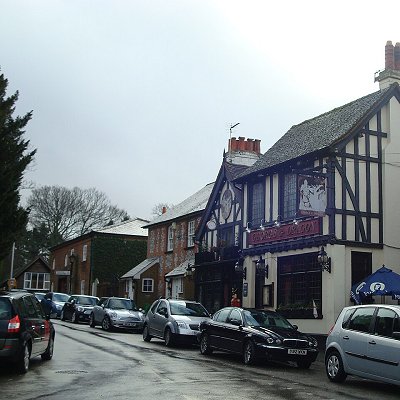
Downe is 3.4 miles (5.5 km) south west of Orpington and 14.2 miles (22.9 km) south east of Charing Cross in London. Downe lies on a low ridge (an outlier of the North Downs), and much of the centre of the village retains its historic buildings; the former village school now acts as the village hall.
The word Downe originates from the Anglo Saxon word dun, latterly down, hence the South and North Downs.
In April 1965, much of Orpington Urban District, including Downe, was transferred from the historic county of Kent and placed within the newly created London Borough of Bromley.
Lord Simon de Manning, a former Lord of the Manor of nearby Kevington, then in Kent, and holder of the land which now includes Downe, was a grandson of Rudolph de Manning, Count Palatine, who married Elgida, aunt of King Harold I, of England; he was the royal Standard Bearer to King Richard the Lionheart, who carried the Royal Standard to Jerusalem in 1190, during the First Crusade. In England, the forms Earl Palatine and Palatine Earldom are preferred.
As well as Downe, Kevington Manor then included the areas which later became Berry's Green, Luxted, Single Street, Westerham Hill, and Leaves Green. These (excluding Kevington), together formed the Darwin (ward), Greater London's largest electoral ward), as it was first constituted in 1965. The current elected political party's website (2022), states that the ward includes Cudham, Leaves Green, Leavesden Estate, Westerham Hill, Beechwood, Berry's Green, and Pratts Bottom.
The spelling of the name of the village varied in the past, until the 1870s it was most commonly "Down", then "Downe’ became more usual.[1] In postal directories of the mid-19th century, it is named as Down. By 1882 Kelly's Directory was using "Downe".
|