Like us on Facebook
PLACE NAMES


|
|
Thurnscoe
|
| |
|
D
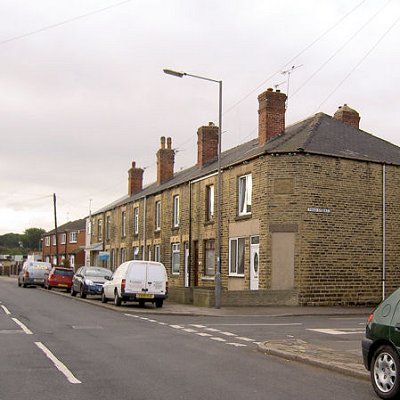
Thurnscoe is a village in the Metropolitan Borough of Barnsley in South Yorkshire, England. The village falls within the Dearne North ward of the Barnsley Metropolitan Borough Council, and along with Goldthorpe and Bolton upon Dearne is part of the Dearne Towns. Historically within the West Riding of Yorkshire, the village is approximately 8.5 miles (14 km) from Barnsley and 8.5 miles (14 km) from Doncaster. It is served by Thurnscoe railway station with bus links provided by Stagecoach. In 2011, it had a population of 8,687.
Set in the heart of the Dearne Valley, historically, Thurnscoe was a farming village and in Roman times it was situated on the Roman road Ryknild Street, which ran down a track, (known locally as "the cow track" as it was the route for the dairy herds until the farm closed in recent years), to the east of what is now Rectory Lane. It continues up Southfield Lane by the side of the cemetery and over fields to the south of the village, and up Clayton Lane to the north. Thurnscoe was known in early times as Turnesc, this becoming Terunsc by the time of its mention in the Domesday Book, with the name Thurnscoe is derived from Old Norse for Thorn Tree Wood. Parts of the village were owned by Roche Abbey, who dug Magnesian Limestone in an area known locally as "Cave Wood" which is a craggy geography between the overlying Cadeby Formation and underlying Yellow Sands Formation, both late Permian. Cadeby limestone from Thurnscoe was a moderately significant export in medieval times.
Thurnscoe's oldest building is the Church of St. Helen on High Street, built in 812 by the Angles and rebuilt in 1087 by the Normans though only the tower of the original structure remains. Excavations during renovation work (under the former Rector, John Hall) on the church revealed Anglo-Saxon remains, including a skeleton, indicating that it was used as a sacred site before the Christian church was established here. The western side of the village has more history to it, including Thurnscoe Hall (now a nursing home) and the 1715 Blacksmith's Cottage near St Helen's Church. Red House Cottage on High Street is the oldest building in the village dating back to the 16th century. Before the mines opened, Thurnscoe was once a wealthy farming community, famous in the Middle Ages for the quality of its cheese. There were a number of historic farms and arable and livestock fields all around the village, but most of the farms have now gone and most of the fields have been covered by modern housing.
In 1931, the civil parish had a population of 10,548. Thurnscoe became an urban district in 1908 which contained the parish. On 1 April 1937 the parish and urban district were abolished and merged with Dearne.
|
 Feel free to Email me any additions or corrections
LINKS AVAILABLE TO YOUR SITE
| |


