|
Rawmarsh is a village in the Metropolitan Borough of Rotherham, in South Yorkshire, England. Historically within the West Riding of Yorkshire, it is 2 miles (3 km) north-northeast from Rotherham town centre and 3 miles (5 km) south-southwest of Swinton. The village also forms part of the Sheffield Urban Area.[1] The Rawmarsh ward of Rotherham MBC had a population of 13,389 at the 2011 Census. Rawmarsh also contains other output areas from neighbouring wards giving it a population of 18,498 in 2011 and 18,535 in 2014.
The name has gone through many changes since being recorded as "Rodemesc" in the Domesday Book and "Raumersche" in 1355. The name is of dual origin, "Rode" is from the Old Norse for "red", while the second element is from Old English mersc "Marsh". This led to "Red Marsh", from its situation in the Permian System of red sandstones and marls which run through the area. Localised clays outcrop and the area was formerly known for its potteries.
At the beginning of the 20th century Rawmarsh was described as "an increasing parish" and included the outlying hamlets of Parkgate, Stubbin and Upper Haugh. In 1851 the population was 2,533 but 50 years later this had increased to 14,587. In 1961, the population was 19,700 but, forty years later, at the 2001 census it had reduced to 17,443. Rawmarsh has laid claim to the title of being the largest village in England; however this claim is unsubstantiated and there are indeed many settlements that make this claim.
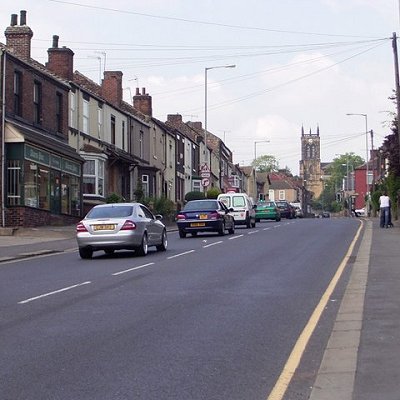
Primarily a residential area, Rawmarsh is known for its church, Rawmarsh St Mary's Parish Church, which dominates the view at the top of Rawmarsh Hill. There has been a church in the town since Norman times (c.1127) but the earliest recorded rector was William de Sutton who was instituted on 6 June 1227. The current church was completed in 1838 when the tower was increased in height and the rest rebuilt, James Pigott Pritchett being the architect. In 1869, the tower began to collapse and was rebuilt incorporating features of the original Norman doorway. In 1894 the sanctuary was enlarged and the vestry, organ chamber and north porch were added. The present sanctuary was repaved in 1977 in memory of Canon Scovell, who is also remembered as a street name in the town; the font is Perpendicular in style and is from the old church. More recently restoration work was undertaken in 2003. The church contains two monuments of interest: one to Lady Middleton and her children (1667) who lived for a time at Aldwarke Hall, and the other to John Darley of Kilnhurst (1616). The Parish Church of Christ Church, Parkgate, separated from Rawmarsh in 1868, was brought back in the early 1960s. There are other churches: St Nicolas, Ryecroft (1928) and a selection of 'Free' churches, Spiritualists, Roman Catholic and Quakers.
|