Like us on Facebook
PLACE NAMES


 
|
|
Maldon
|
| |
|
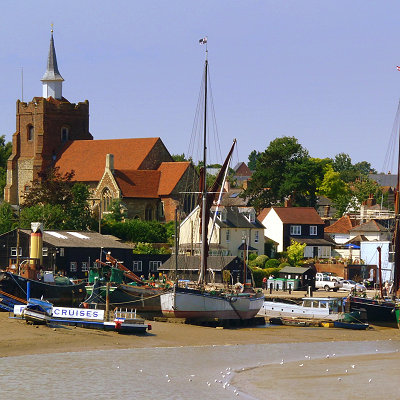
Maldon is a town on the Blackwater estuary in Essex, England. It is the seat of the Maldon district and starting point of the Chelmer and Blackwater Navigation.
Maldon is twinned with the Dutch town of Cuijk. The charter between the two towns was signed in 1970 to cement the relationship.
East Saxons settled the area in the fifth century and the area to the south is still known as the Dengie peninsula after the Dæningas. It became a significant Saxon port with a hythe or Quayside and artisan quarters. Evidence of imported pottery from this period has been found in archaeological digs. From 958 there was a royal mint issuing coins for the late Anglo-Saxon and early Norman kings.
It was one of the only two towns in Essex (Colchester was the other), and King Edward the Elder lived here while combating the Danish settlers who had overrun North Essex and parts of East Anglia. A Viking raid was beaten off in 924, but in another raid in 991 the defenders were defeated in the Battle of Maldon and the Vikings received tribute but apparently did not attempt to sack the town. It became the subject of the poem The Battle of Maldon.
According to the Domesday Book there were 180 townsmen in 1086. The town still had the mint and supplied a warhorse and warship for the king's service in return for its privileges of self-government. There were strong urban traditions here with two members elected to the Commons and three guilds which hosted lavish religious plays until they were suppressed by Puritans in 1576. Then, until 1630, professional actors were invited to perform plays, which were also stopped by Puritans. From 1570 to about 1800 a rival tradition of inviting prominent clergy to visit the town also existed. In 1629 a series of grain riots took place, led by the wife of a local butcher.
In the seventeenth century Thomas Plume started the Plume Library to house over 8,000 books and pamphlets printed between 1487 and his death in 1704; the collection has been added to at various times since 1704. The Plume Library is to be found at St. Peter's Church. Only the original tower survives, the rest of the building having been rebuilt by Thomas Plume to house his library (on the first floor) and Maldon Grammar School (on the ground floor).
Maldon was chosen as one of the landing sites of a planned French invasion of Britain in 1744 However the French invasion fleet was wrecked in storms, and their forces never landed.
|
 Feel free to Email me any additions or corrections
LINKS AVAILABLE TO YOUR SITE
| |


